
How to Choose the Right Packaging for Shipping Fragile Items
Shipping fragile items sounds simple until something breaks. Most businesses learn this the hard way.
A cracked product, a refund, an unhappy customer. It does not take many of these before packaging becomes a priority.
The real issue is not just protection. It is consistent. You need a system that works every time, across different order sizes, distances, and handling conditions.
This guide breaks down how to choose the right packaging supplies for fragile items without overcomplicating the process or overspending where it does not help.
Why fragile packaging fails more often than expected
It is rarely one big mistake.
More often, it is a combination of small gaps:
- Weak outer boxes
- Poor internal cushioning
- Incorrect sizing
- No buffer for movement
Individually, these might seem manageable. Together, they create failure points.
And here is the thing. Courier handling is not gentle. Packages are stacked, dropped, and shifted. Your packaging needs to assume that reality.
Start with understanding the level of fragility
Not all fragile items are the same. Some products need basic protection. Others require multiple layers and precise handling.
A quick way to assess:
- Can it survive a short drop?
- Does pressure damage it?
- Is it sensitive to movement or vibration?
Glassware, electronics, ceramics, and certain food products all behave differently during transit.
This step matters because your choice of packaging supplies depends entirely on how the product reacts to impact.
Outer packaging: Your first line of defence
Choosing the right box strength
This is where many businesses cut corners.
A standard box might work for non-fragile items. For fragile products, you need corrugated boxes with proper strength ratings.
Look for:
- Double-wall or triple-wall corrugation
- High burst strength
- Consistent structural integrity
If the outer box fails, nothing inside matters.
Right-sizing is more important than it sounds

Oversized boxes are not safer.
They create empty space. And empty space leads to movement.
Undersized boxes are just as risky. They compress internal cushioning.
The goal is controlled space. Enough room for protective layers, but not so much that the product shifts.
Internal protection: where most of the work happens
This is the layer that actually absorbs impact.
Cushioning materials that work
Different materials serve different purposes.
- Bubble wrap absorbs shock
- Foam inserts provide structure
- Paper fill works for lighter items
For heavier, fragile items, combining materials is often necessary.
For example, a ceramic product might need foam support with an outer layer of bubble wrap.
The importance of immobilisation
Protection is not just about padding. It is about stability.
If the item moves inside the box, even slightly, repeated impacts increase the risk of damage.
The goal is simple:
The product should stay in place, even if the box is shaken.
This often means using custom inserts or layered cushioning.
Layering: The difference between average and reliable packaging
Single-layer protection rarely holds up in real shipping conditions.
A more reliable structure looks like this:
- Product wrapped in primary cushioning
- Secondary protective layer
- Outer box with void fill
It may sound excessive. It is not. This layered approach spreads impact instead of concentrating it in one place.
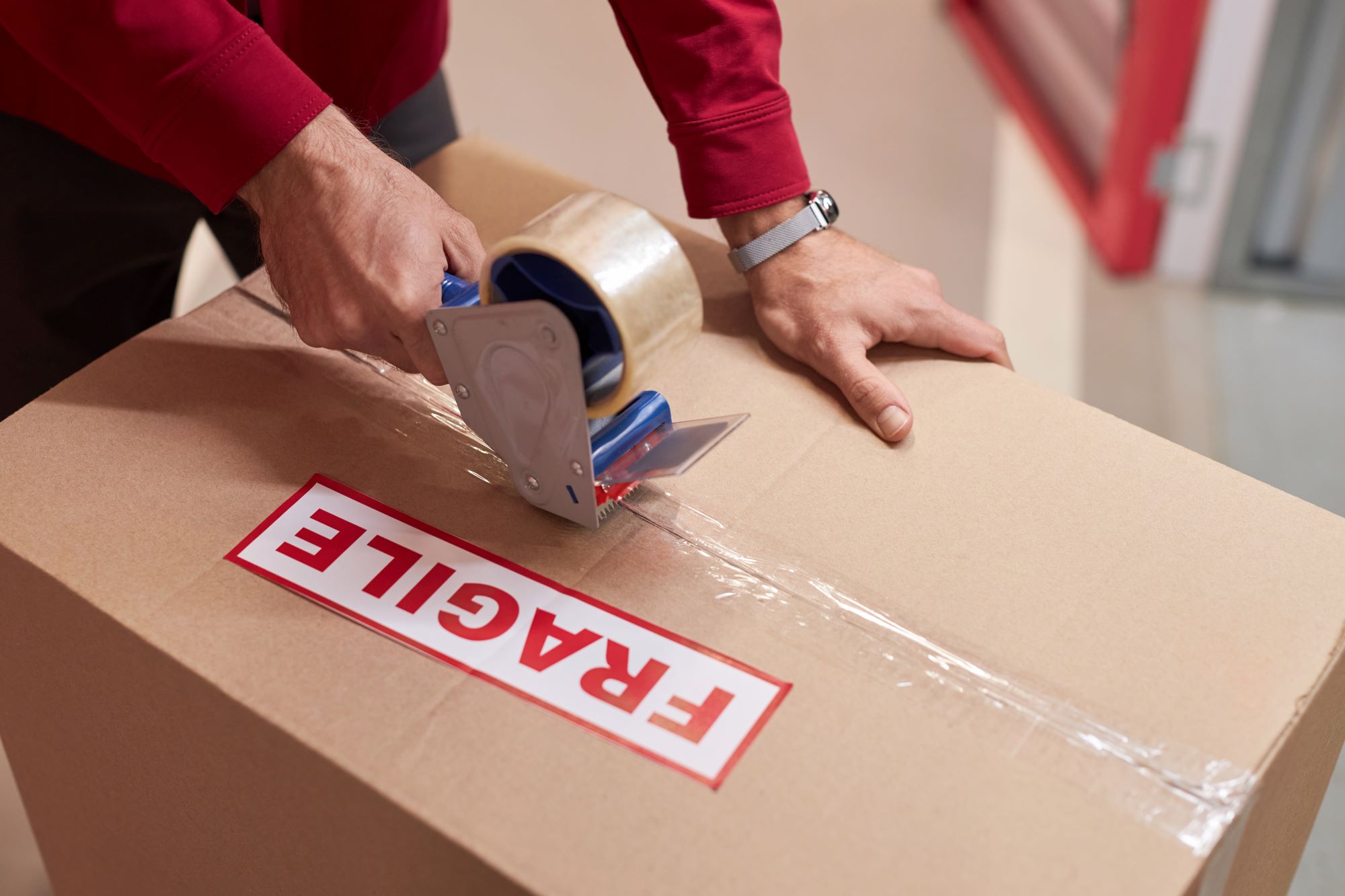
Sealing and closure: often overlooked, but critical
Even strong packaging fails if it is not sealed properly.
Use:
- High-quality packing tape
- Reinforced sealing for heavier items
- Proper taping techniques across edges
Weak sealing leads to box failure during transit. It is a small step, but it carries a lot of weight.
Special considerations for different product types
Not all fragile items behave the same during shipping.
-
Glass and ceramics
Require multiple cushioning layers and strong outer boxes
-
Electronics
Need anti-static protection and shock absorption
-
Food products
Here, structure and hygiene both matter. In some cases, businesses combine rigid boxes with cardboard packaging for food to maintain safety and compliance during transit.
When specialised packaging becomes necessary
There are cases where standard packaging is not enough.
For example:
- High-value items
- Temperature-sensitive goods
- Vacuum-sealed products
In such scenarios, businesses may explore solutions like vacuum packaging to reduce internal movement and protect contents more effectively.
Similarly, lightweight fragile items sometimes use structured outer formats like sleeve packaging for added reinforcement without increasing bulk.
These are not everyday solutions. But for the right products, they reduce risk significantly.
Cost vs damage: Getting the balance right
It is tempting to reduce packaging costs, especially when margins are tight.
But fragile shipping changes the equation.
Every damaged product leads to:
- Replacement costs
- Shipping losses
- Customer dissatisfaction
Investing slightly more in reliable packaging supplies often reduces overall costs in the long run.
The balance is not about spending more. It is about spending where it actually prevents loss.
Common mistakes businesses make with fragile packaging
These show up more often than expected.
-
Using generic boxes for all products
Different items require different levels of protection
-
Underestimating transit conditions
Packaging designed for shelf storage rarely works for shipping
-
Overfilling with loose material
Too much filler without structure leads to shifting
-
Ignoring drop impact
Most damage happens from drops, not compression
-
Skipping testing
Not testing packaging under real conditions leads to surprises
Testing your packaging before scaling
This step is often skipped.
It should not be.
Basic testing can reveal most issues:
- Drop tests from different heights
- Compression tests for stacking
- Vibration tests for movement
You do not need complex equipment. Even simple in-house testing gives useful insights.
It is better to find weaknesses early than through customer complaints.
Building a packaging system, not just a solution
One-off fixes do not scale.
As your business grows, you need consistency.
That means:
- Standardising packaging sizes
- Working with reliable suppliers
- Planning for bulk requirements
At this stage, packaging becomes part of operations, not just fulfilment.
Final thoughts
Shipping fragile items will always carry some level of risk.
The goal is not perfection. It is reliability. Always.
If your current setup leads to occasional damage, that is a signal. Something in the system needs adjustment.
At Fine Pack, we work with businesses that reach this point. The focus is not just on adding more layers or materials. It is about structuring the right combination of packaging supplies so that protection becomes consistent, not dependent on chance.
Sometimes the changes are small. Better box strength. Improved cushioning. Slightly tighter sizing.
But those small shifts tend to solve most of the bigger problems.
FAQs
How much cushioning is enough for fragile products?
Enough to immobilise the item completely within the box. If the product shifts when the box is shaken, more structured cushioning is needed.
Are eco-friendly packaging options suitable for fragile items?
Yes, paper-based fillers and recyclable cushioning materials can work well when layered correctly. They provide protection while reducing environmental impact.
Do I need custom packaging for fragile products?
Not always, but for high-value or sensitive items, custom inserts or structured packaging improve safety and reduce damage rates over time.
How can I test packaging before shipping products?
Simple drop tests, compression checks, and vibration simulations can help identify weak points. Testing under realistic conditions is essential before scaling.
Is it better to use larger boxes for fragile items?
No, oversized boxes increase movement and risk of damage. The box should fit closely while allowing space for protective layers.
What role do packaging supplies play in reducing returns?
High-quality packaging supplies reduce breakage during transit, which directly lowers return rates and improves customer satisfaction.


You must be logged in to post a comment.