
The Biggest Mistakes Businesses Make with Sustainable Food Packaging

There is growing pressure on businesses to make better packaging decisions. This is not just because of trends, but because packaging now affects operations, compliance, customer expectations, and long-term brand image. Many Australian businesses are moving towards Sustainable Food Packaging, and at first, it may seem like a simple change.
In reality, it is often more complex than expected.
A packaging solution that appears environmentally friendly may create other challenges if not chosen carefully. Shelf life can be affected, costs may increase, packaging claims may not meet standards, and sometimes the packaging simply does not perform as required.
Let’s look at some of the common mistakes businesses make when switching to sustainable packaging, and how these issues usually happen in real-world situations.
Mistake 1: Treating sustainability as a branding exercise
This is usually where it begins.
A business decides to go sustainable because the market expects it. So the focus shifts to how the packaging looks, what it says, and how it can be positioned.
The problem is that packaging is not just visual.
It has to:
- Protect the product
- Maintain safety standards
- Perform consistently across storage and transport
When sustainability is treated as a surface-level decision, functionality gets sidelined. The packaging might look responsible, but if it fails under real conditions, the cost of that failure is much higher than any short-term gain in perception.
Mistake 2: Choosing materials without understanding product behaviour
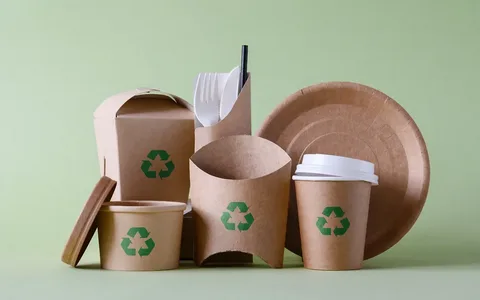
Not all products behave the same way.
Dry powders, roasted coffee, fresh snacks, and liquid-based foods each respond differently to moisture, oxygen, and temperature. Yet, many businesses select materials based on what is labelled eco-friendly rather than what actually suits their product.
This leads to issues like:
- Reduced shelf life
- Loss of texture or flavour
- Increased spoilage
A compostable film might work for one product and fail completely for another. That mismatch is where many packaging decisions fall apart.
Sustainable Food Packaging only works when the material aligns with the product’s actual needs.
Mistake 3: Ignoring barrier performance
There’s a tendency to assume that sustainability and performance will naturally align. They don’t always.
Barrier properties are what protect food from:
- Oxygen exposure
- Moisture absorption
- External contaminants
If these are compromised, the packaging stops doing its primary job.
Some recyclable or biodegradable materials still struggle to match the barrier performance of traditional multi-layer plastics. Improvements are happening, but the gap hasn’t disappeared.
So when businesses switch materials without properly evaluating barrier performance, they risk damaging the product itself.
And once that happens, sustainability becomes irrelevant. Because the product is no longer viable.
Mistake 4: Overstating sustainability claims
This one is subtle, but it matters.
Phrases like:
- 100% eco-friendly
- Fully sustainable
- “green packaging solution
They sound convincing. But they are often too broad to be accurate.
In Australia, packaging claims are increasingly scrutinised. Organisations like the Australian Competition and Consumer Commission have taken a stronger stance on misleading environmental claims.
The issue is not just legal. It’s reputational.
Customers are more informed now. They question vague claims. And when those claims don’t hold up, trust erodes quickly.
It’s better to be specific. Even if that means admitting limitations.
Mistake 5: Assuming recyclable means recyclable everywhere
Recyclability is not universal.
A material might be technically recyclable, but that doesn’t mean it will be recycled in practice. Local infrastructure plays a significant role.
For example:
- Soft plastics may require specialised collection systems
- Multi-layer materials are often difficult to process
- Compostable packaging may need industrial facilities, not home composting
This disconnect creates confusion.
Businesses label their packaging as recyclable, but end users may not have the means to dispose of it correctly. The result is the same as non-recyclable waste.
This is where understanding regional systems becomes important. Without that, sustainability claims lose their practical meaning.
Mistake 6: Overlooking compliance requirements
Sustainability does not replace food safety regulations.
Packaging must still comply with standards set by Food Standards Australia New Zealand. That includes:
- Migration limits
- Material safety
- Suitability for intended use
Some eco-friendly materials may not meet these requirements without additional treatment or layering.
And this is where businesses sometimes cut corners, unintentionally.
They assume that if a material is marketed as safe, it must be compliant. That assumption can lead to serious consequences, including product recalls.
Mistake 7: Underestimating the role of packaging design
Material choice is only one part of the equation.
Design affects:
- How the product is sealed
- How it is stored
- How it is handled by consumers
A poorly-designed package can lead to:
- Leakage
- Contamination
- Reduced usability
Even sustainable materials can fail if the design doesn’t support them properly.
This is why structural design, sealing methods, and usability features need to be considered alongside sustainability goals.
Mistake 8: Trying to switch everything at once
There’s often pressure to make a complete transition quickly.
Replacing all materials at once, updating every format, and repositioning the entire product line can seem like the fastest path forward.
In practice, this approach creates operational strain.
Supply chains need time to adjust, production processes may need recalibration, and testing cycles often become compressed, increasing the risk of oversight.
A staged approach tends to work better:
- Start with one product category
- Test performance under real conditions
- Scale gradually
It may take longer, but the process is often more stable and reliable.
Mistake 9: Ignoring cost implications beyond the surface
Sustainable materials often come with a higher upfront cost, and that’s usually the first concern businesses raise.
But focusing only on the unit price can overlook the bigger picture.
Costs also come from:
- Product spoilage
- Returns and customer complaints
- Repackaging or redesign work
- Compliance failures
In some cases, a cheaper material can end up creating higher overall costs once these factors are taken into account.
That’s why a balanced approach matters, one that looks beyond procurement pricing and considers long-term performance and operational impact.
Mistake 10: Treating packaging as an isolated decision
Packaging decisions are often made in separate departments.
Marketing focuses on visual appeal, procurement prioritises cost, and operations concentrate on efficiency. Sustainability, however, affects all of these areas.
When decisions are made in isolation, misalignment can happen. A material selected for sustainability may not suit production requirements, while a design chosen for branding may fall short of compliance standards.
Better outcomes usually come from bringing these perspectives together early in the process, rather than addressing issues later on.
Where customisation actually helps
Generic packaging solutions rarely address every requirement effectively.
This is where tailored formats can make a difference. For example:
- A custom coffee bag can incorporate degassing valves while maintaining barrier integrity
- Custom boxes and packaging can be optimised to reduce material waste during shipping
- Food packaging labels can provide clearer disposal instructions, reducing consumer confusion
Customisation gives businesses more control over performance, sustainability, and communication.
It’s not always essential, but in many cases, it helps reduce long-term operational and compliance challenges.
A more grounded way to approach sustainable packaging
Instead of aiming for perfection, it’s often more effective to focus on continuous improvement.
Questions like these can help guide better decisions:
- Where can material use be reduced?
- Which components can be made recyclable?
- How can the packaging size be optimised?
- What claims can be supported with evidence?
This kind of thinking leads to practical, measurable progress.
It also helps businesses avoid chasing solutions that may sound ideal in theory but become difficult to implement effectively in practice.
Final thoughts
There’s a tendency to look for a single right solution in Sustainable Food Packaging. Something that ticks every box at once.
In reality, that kind of solution doesn’t fully exist, at least not yet.
What does exist is a process of informed decision-making. Some changes work immediately, while others need refinement over time. That’s a normal part of developing more sustainable packaging systems.
At Fine Pack, we’ve seen how small, deliberate changes tend to outperform large, rushed transitions. The focus is less about getting everything perfect at once and more about creating a packaging system that can adapt alongside the product, business needs, and market expectations.
If there’s a takeaway here, it’s this. Sustainability in packaging is not a finish line. It’s an ongoing process that requires careful evaluation, practical adjustments, and regular reassessment.
FAQs
Can all food products use sustainable packaging materials?
Not always. Some products require high barrier protection that certain eco-friendly materials cannot yet provide without compromise.
Is recyclable packaging always environmentally beneficial?
Only if it is actually recycled. Local infrastructure and consumer behaviour determine whether recyclable materials are processed correctly.
How can businesses avoid misleading sustainability claims?
By being specific about what the packaging can and cannot do. Avoid broad terms and support claims with verifiable information.
Does sustainable packaging increase costs significantly?
It can increase upfront costs, but long-term savings may come from reduced waste, better shelf life, and fewer compliance risks.
Why is barrier performance important in food packaging?
It controls exposure to oxygen and moisture, which directly affects product freshness, safety, and shelf life.
Should businesses switch to sustainable packaging all at once?
A phased approach works better. Testing and gradual implementation reduce risk and allow for adjustments along the way.



You must be logged in to post a comment.